
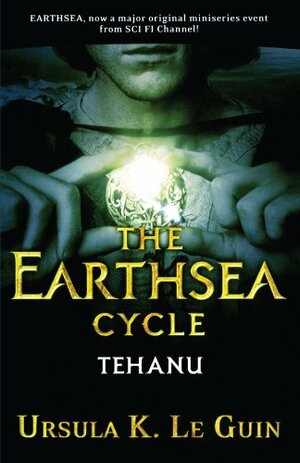
Years before, they had escaped together from the sinister Tombs of Atuan—she, an isolated young priestess, he, a powerful wizard. Now she is a farmer’s widow, having chosen for herself the simple pleasures of an ordinary life. And he is a broken old man, mourning the powers lost to him not by choice.
A lifetime ago, they helped each other at a time of darkness and danger. Now they must join forces again, to help another — the physically and emotionally scarred child whose own destiny remains to be revealed.

Recommending the fourth book in a series? Laura, excuse me?
Okay, yes, you do have to read the first three books to really get the full effect.
But it is completely worth it.
Ursula K. Le Guin’s work was first published in the 1950s and she continued writing and publishing work for 60 years until she neared her death in 2018. Her work was mainly fantasy and science fiction, with some realistic fiction and poetry in there as well.
She was one of the first writers to publish a book classified as feminist science fiction, with her novel The Left Hand of Darkness in 1969.
The reason I find the Earthsea Cycle series so fascinating and so interesting to read is the evolution.
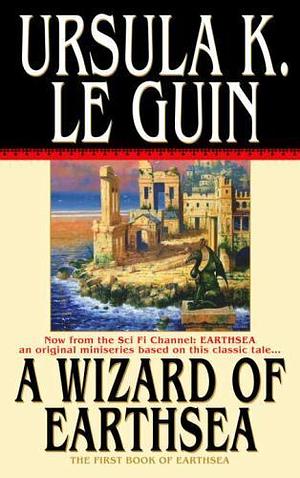
Le Guin wrote the first book, A Wizard of Earthsea, in 1968, when she was first beginning to dare to write about feminism while also under contract with a publisher. Thus, the first three books follow more typical fantasy beats of the time. A young male wizard coming to age in a typical fantasy-world patriarchy (we all know the one).
This male wizard (Sparrowhawk) is a good character, complex and gray while not being a misogynist (which honestly is a breath of fresh air coming from fantasy books of this decade). However, the book centers him.
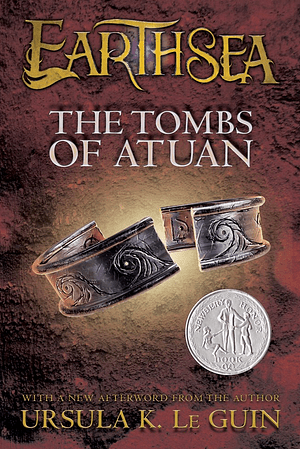
Then, in book two, we’re introduced to Tenar, who will later become the hero of this fourth book, Tehanu. She’s first depicted as a maiden to save, to rescue from the coven of women who have become insular and fiercely superstitious.
All to protect a precious artifact from the men who come bumbling through, trying to steal it, killing everyone in their path. This group of women are both protective and possessive, with Tenar in the middle.
Coming into the fourth book, she reckons with those childhood experiences, her push into the larger patriarchal world when Sparrowhawk freed her, and how she wants to raise her adoptive daughter to be more than the world tells her she can be.
It’s a complicated book, because it wrestles with the patriarchal actions of men as well as how that infects women’s actions as well.
How can you survive in a patriarchy, without becoming part of it?
How do you fight the influences surrounding your children, knowing that you can’t control their environment forever?
And most importantly, how do you acknowledge and use your own power, when you’ve been told since birth that you don’t have any?
Make no mistake, the previous three books are lovely and explore death, power, and leadership. But this book, published a full two decades later, is a complete marvel.
Very rarely have I seen an author completely transform the central perspective.
From a wider lens, this is also a potent example of how shifting POVs can drastically shape world-building. The first three books contained almost no female characters, and when they did take the stage, they were brief and small. This time, the male characters are small.
The best way to establish world-building in fiction is to show the reader how characters experience the world and live in it. Description is nice, but typically doesn’t stick. It’s the narration of characters dumping sand from their shoes or their speech patterns when interacting with others in-scene that stay with readers. And that’s what Le Guin has done with this series.
The beginning is nice, but the fourth book, Tehanu, is what makes it unforgettable.

 Blue Eye Books