
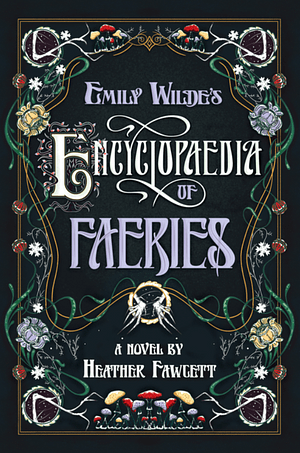
Emily Wilde’s Encyclopaedia of Faeries by Heather Fawcett
A curmudgeonly professor journeys to a small town in the far north to study faerie folklore and discovers dark fae magic, friendship, and love, in this heartwarming and enchanting fantasy.
Cambridge professor Emily Wilde is good at many things: She is the foremost expert on the study of faeries. She is a genius scholar and a meticulous researcher who is writing the world’s first encyclopaedia of faerie lore.
But Emily Wilde is not good at people. She could never make small talk at a party—or even get invited to one. And she prefers the company of her books, her dog, Shadow, and the Fair Folk to other people.
So when she arrives in the hardscrabble village of Hrafnsvik, Emily has no intention of befriending the gruff townsfolk. Nor does she care to spend time with another new arrival: her dashing and insufferably handsome academic rival Wendell Bambleby, who manages to charm the townsfolk, get in the middle of Emily’s research, and utterly confound and frustrate her.
But as Emily gets closer and closer to uncovering the secrets of the Hidden Ones—the most elusive of all faeries—lurking in the shadowy forest outside the town, she also finds herself on the trail of another mystery: Who is Wendell Bambleby, and what does he really want? To find the answer, she’ll have to unlock the greatest mystery of all—her own heart.

First things first: this discussion will cover the whole series so if you don’t want hints of spoilers, just go read it first then come back! Because honestly there’s a lot here.
The TLDR here is that I absolutely loved the book. I hated Wendell (although it’s hard for a male protagonist to be endearing to me) but I felt his character had a certain usefulness when it came to Emily’s goals in life and led to some brilliant character development. Hence: while being an idiot, he is generally useful.
The series takes place in a historical version of Europe, where the fae are a scholarly, and very real, pursuit. Emily, our MC, is deep in the throes of academia, where publish or perish is just beginning to take root in the field. She’s a new professor at Cambridge and looking to establish herself by writing an encyclopaedia in the first book, a map of faerie in the second, and a book on Tall One politics in the third.
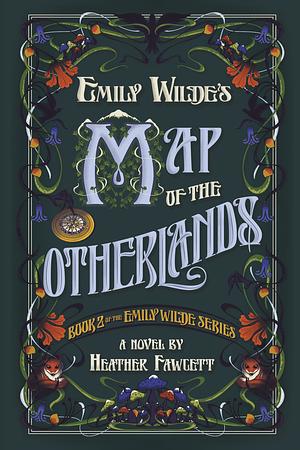
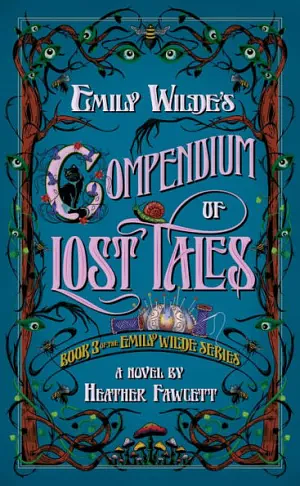
From a structure standpoint, I loved this. The academic works give each book a sense of completion and ensured the middle book wasn’t simple a plot bridge to the “final battle” as it were. It’s also interesting from a meta perspective as the books are written in “research diary” style, giving the whole thing a very lived in feel.
Emily herself is lovely. Her character is dynamic, well drawn, witty, and singular. She’s also wonderfully stubborn, logical, independent, and most importantly willing to accept genuine wrong doing on her part.
IMO that’s what makes a great MC: their decisions are believable and backed up by other context clues as to their character, but they’re also people.
Emily frequently goes off in her own direction in the name of research, sometimes ill-advisedly, but always confidently. If things don’t turn out well, she grows, and we can see that growth in later scenes. Something she never “grows out of,” however is her introvertedness and social awkwardness.
Because that isn’t something that is bad or needs fixing.
Let me emphasize. Social awkwardness is not a character flaw. It’s a trait.
This is where Wendell comes in.
Wendell is presented as Emily’s perfect match in a way. He’s a social butterfly, charming, prone to creaturely comforts, and is also fae. That last part is important, because that’s where his utility comes in.
Genuinely, Wendell’s other traits only marginally add to Emily’s life. Emily frequently rejects the notion of needing a romantic partner and only observes limited use for Wendell’s social acumen. More important to her is his status as an exiled prince of a dangerous and generally un-studied faerie realm.
Through him, she can gain access to an area of faerie from which no human has returned to tell the tale. And that makes him fascinating from an academic and personal perspective (while also being kind of fun to hang out with).
What can I say except she’s an absolute queen.
Wendell by himself is okay. He’s very needy and generally somehow not very smart? No idea how he managed to stay a professor at Cambridge other than maybe magicking people or just being male-presenting, let’s be real. (he literally faked pretty much all of the papers he ever published??)
Which is both funny in an interesting way because we associate fae with intelligence and also kind of baffling and also a little infuriating. In the third book he gets particularly erratic, giving Emily extremely thoughtful gifts in one moment and becoming hopelessly lost in another.
For example, the entire premise of Wendell is his exiled status and his goal of finding a door back to his realm. He’s been at it for literally a decade. Then Emily comes along and in a few short months of concentrated study, finds the door in a jiffy.
So conclusion: he’s nice.
He’s great in the faerie realm (which is a realm of inherent nonsensical logic), but I found myself frequently shaking my head at him. I wish Emily hadn’t chosen to marry him but well, that’s what sells in publishing.
The animal companions are, as always, amazing. Emily’s bond with her dog, Shadow, (who is also a grim) is arguably stronger than her bond with Wendell which I love. Wendell has a cat who gives Cheshire cat vibes and is generally excellent.
I’ll leave you with this question I found myself pondering while working my way through the series. The prevailing academic theory about the construction and strength of faerie is that it is governed by stories. Therefore, if you know multiple stories of a realm, you can piece together patterns of magic.
In this way, where would human history be without stories and oral history? Is that not true of our world as well?

 Blue Eye Books