
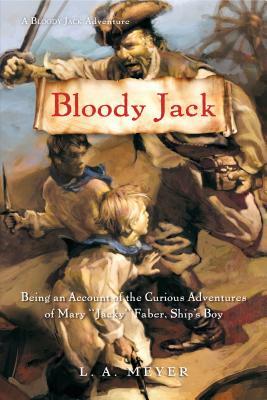
Narrated by Katherine Kellgren
Life as a ship’s boy aboard HMS Dolphin is a dream come true for Jacky Faber. Gone are the days of scavenging for food and fighting for survival on the streets of eighteenth-century London. Instead, Jacky is becoming a skilled and respected sailor as the crew pursues pirates on the high seas.
There’s only one problem: Jacky is a girl. And she will have to use every bit of her spirit, wit, and courage to keep the crew from discovering her secret. This could be the adventure of her life–if only she doesn’t get caught. . . .

I’ve never been an audiobook person. I’ve only recently become a podcast person and only very specific podcasts. I’m picking about who I listen to and what engages me. I read the first book in this series as a physical book and loved it. But when I went to reserve the second from my local library, they didn’t have a print version available anywhere in the system (a very popular series to read in the summer, I guess!). I took the leap and requested the audio version thinking I’d listen through one book then jump back to print.
Five books later, and I’m still listening.
The audiobook is narrated by Katherine Kellgren, a prolific audiobook narrator and actor. She recorded over 300 audiobooks in her life and won numerous awards for her book.

She actually won awards for multiple Bloody Jack books (an Audie Award for Book #1, two Audie Awards for Book #2, and an Audie Award for Book #10) and was nominated for multiple others.
Audiobooks as a concept have experienced cultural waves over the past several decades.
I remember this big debate sparking in the early 2010s on whether listening to an audiobook counted as “reading” or if it was just like listening to music. When Goodreads added the audiobook tracking functions, it was very divisive at first.
(Although I’d argue oral stories are literally the first version of media created by humanity so they are inherently the “most traditional.” Honestly, it likely has a lot to do with how intellectualism was tied to books in the 1500s. But I digress.)
Then the podcast era crept up and suddenly, listening became a cool way to consume media. You could posit this shift is due to the the overheating of capitalist markets wherein people are expected to always be moving from one job to another, never slowing down, making money from every possible minute of their lives (because how else do we survive inflation?). There’s not really a lot of time to sit down and read for a few hours.
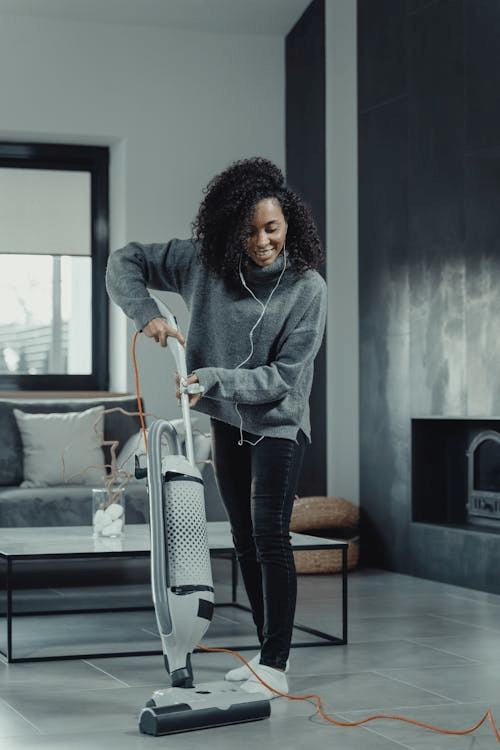
Every hour of our day is maximized for efficiency. Even in the self-care industry, it became a core recommendation: get your self-care in via audiobook while also cleaning! Two birds, one stone!
Putting aside the implicit misogyny there, I’d like to consider this idea that consuming an audiobook can be passive. You can accomplish your daily chapter goal by listening while you do other routine tasks that require only half your brain, thereby forcing your brain to switch quickly between the two (something that is not relaxing, can confirm).
Let me tell you a story.
During my MFA, I didn’t have a ton of time to read fiction for pleasure. Every moment of my day was consumed by teaching composition, grading (oh endless grading), working on my poetry, or reading the multiple books a week required by my program.
It was 9pm in October. The throes of the semester were upon me. The sun was down and I hadn’t yet eaten dinner, having just returned home from a late workshop.
I walk back to my apartment, put down my bag, rummage through my cabinets and fridge, and decide on some fish and veggies. Pans clanked on the coils, a touch of olive oil in each. Empty the bag of frozen broccoli and cut open the packet of catfish. Turn on my audiobook (Under the Jolly Roger, Bloody Jack #3).
I stir the broccoli a couple time, flip the fish.
Everything’s going great, add a little salt, some paprika.
And then, we get to a good part.
Jackie Faber is engaged in battle! And there’s fighting! And singing! And cannons!
And my fish is bone dry, blacked, and horrifically adhered to the pan.
Oops.
When did that happen?
I pause the book while grabbing a metal spatula and a splash of water to deglaze the pan and scrape off what I can.
When I’m reading a physical book, it’s impossible for me to focus on anything else. I find myself rereading pages if I’m distracted, going back a line or two thinking “wait, why did the character do that??”
With a good audiobook narrator, the result is the same.

I’ve certainly listened to audiobooks where that wasn’t the case. The actor didn’t “act” per say, just read. In a way, I want to insist like children do: you have to do the voices! Just plain reading, isn’t enough. Just plain talking even, if we’re expanding to podcasts, isn’t enough. Sure, there are books where you don’t need to be completely focused to get the gist.
But I’d argue that passive consumption is really no-benefit consumption. If you are only dedicating half of yourself to this item, what are you actually gaining from it? Will it actually change your thinking or expose you to new ideas in a meaningful way?
This is also an example of the media makes the impact. If you read the Bloody Jack books, I have no doubt you’ll enjoy them. They’re entertaining, engaging, interesting, and fast-paced. However, the audiobooks are in a league of their own, all due to Katherine Kellgren.
She made them into something more.
She made me excited to listen to a series that is lengthy. Twelve books, lengthy. A series I would have otherwise likely petered out reading around book three.
And thus is the value of a good audiobook actor.
(not a creepy AI voice, please mega tech companies do not invest money and ecological resources into that, they’re all terrible)
I’ll be making it a priority to listen to other audiobooks Katherin Kellgren recorded, and would love recommendations from y’all as to your own favorites.

 Blue Eye Books